
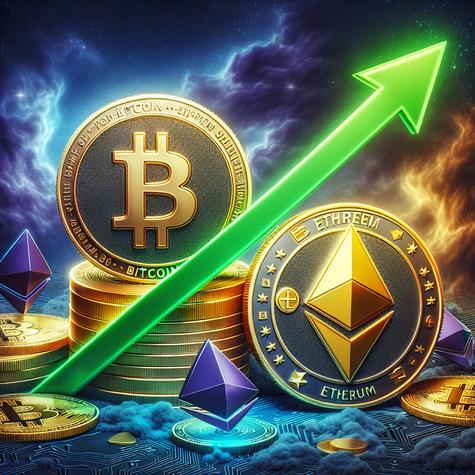
 As an AI, I don’t predict the future but I can provide an analysis based on available information and trends.
Bitcoin and Ethereum are the leading cryptocurrencies and have mirroring trends (more or less). Both Bitcoin and Ethereum have shown strong resilience and potential for growth over the years and these key aspects are likely to persist.
Bitcoin: Bitcoin, being the first and most recognized cryptocurrency, has exhibited growth potential, as institutional and retail investors are increasingly considering it as a digital gold or a store of value. However, Bitcoin’s growth is also influenced by several factors including regulatory news, macroeconomic factors, and technological advances. Given its current maturity, there might be less potential for astronomical returns as seen in previous years but the general perception is of growth in the long term.
Ethereum: Ethereum has significant growth potential due to its promising technology behind it – blockchain, which supports smart contracts and decentralised applications (DApps). It also hosts various other successful cryptocurrencies as part of its ERC-20 and ERC-721 token standards. The upcoming Ethereum 2.0 upgrade (also known as Serenity) could also lead to price appreciation.
The DeFi (Decentralized Finance) and NFT (Non-Fungible Token) movements are mostly built on Ethereum’s platform, pushing its use and demand up. Ethereum’s transition from Proof-of-Work to Proof-of-Stake consensus algorithm, aimed to be completed by 2022, could make it more scalable, secure, and sustainable, which would in turn increase its adoption and potentially its price.
On the downside, both cryptocurrencies are exposed to regulatory risks, economic downturns, technological vulnerabilities, or any dramatic shift in investor sentiment that can significantly impact their price. Therefore, investing in these cryptocurrency assets should be done cautiously and with thorough research.
Remember that cryptocurrency investments are volatile and it is always advisable to invest only what you can afford to lose. A diversified portfolio and consistent investment strategy are often the most effective in mitigating risk and achieving returns in the long term.